
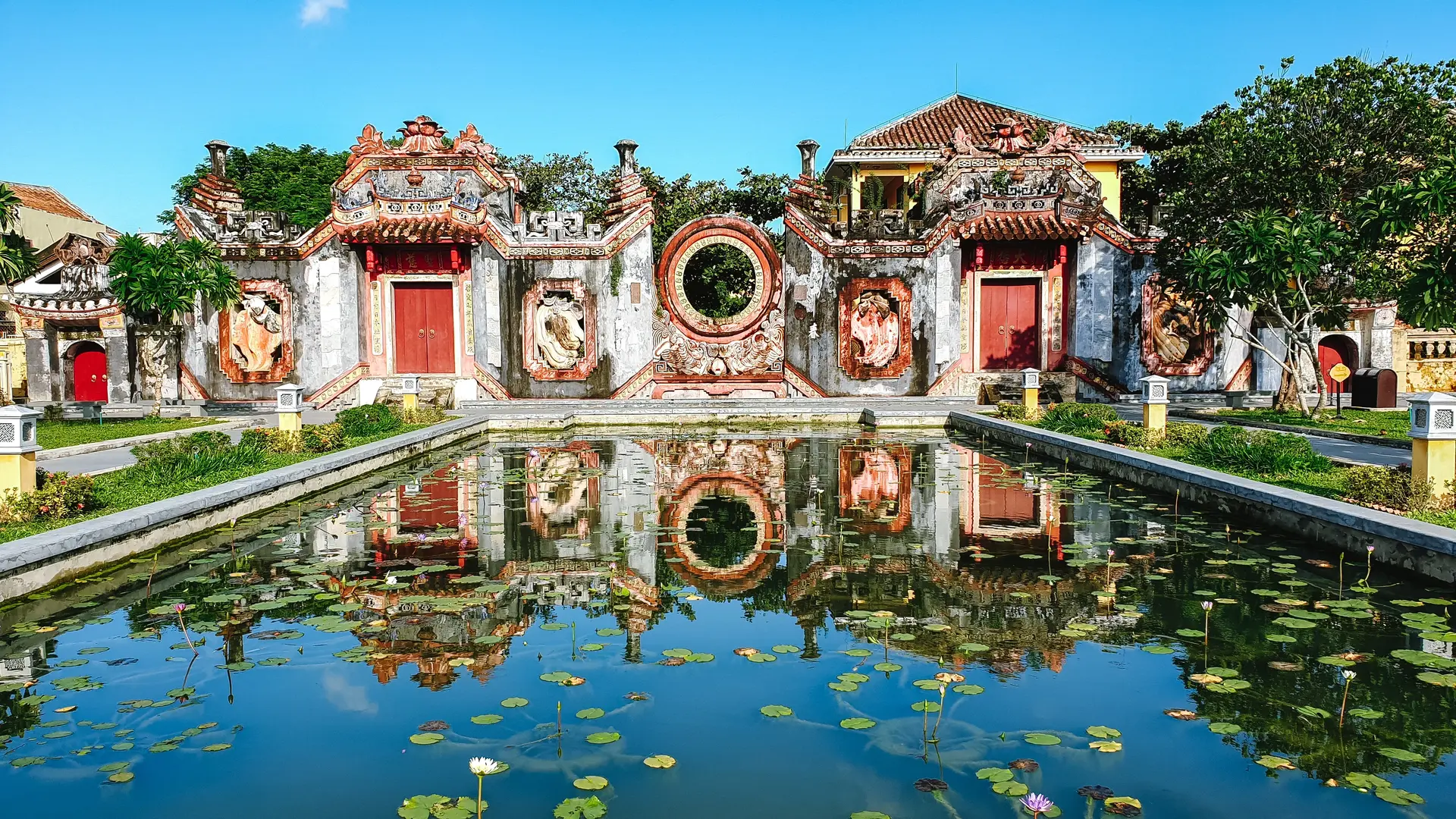
Hội An’s story spans more than two millennia. Known as “Lam Ap” under the Champa Kingdom, it later became one of Asia’s busiest trading ports, welcoming Chinese, Japanese, Portuguese, and Dutch merchants. The blend of architectural styles and cultural traditions visible today comes from centuries of exchange, followed by a quiet period when the Thu Bon River silted up—preserving the town like a time capsule.
Timeline highlights
- 2nd century: Champa people establish port cities along the Thu Bon River.
- 15th–17th centuries: Hội An (Faifo) becomes a major international trading hub; Japanese traders build the iconic bridge.
- 18th century: Chinese merchant families construct assembly halls and shophouses.
- 19th century: River silting shifts trade to Đà Nẵng; Hội An enters a period of “sleep,” preserving its architecture.
- 1999: Hội An Ancient Town inscribed as a UNESCO World Heritage site.
Architecture & culture
Look for carved wooden facades, colorful assembly halls, and Vietnamese tube houses with interior courtyards. Temples blend Taoist, Buddhist, and folk beliefs. Lantern artisans, tailors, and makers keep traditional crafts alive—book workshops through our tours.
Exploring today
Purchase the Ancient Town ticket to access heritage sites, visit in the early morning or evening to avoid crowds, and consider a guided walk for deeper context. Stay steps away at a boutique hotel to soak up the atmosphere.
For more on preservation and modern travel etiquette, read our UNESCO guide.